
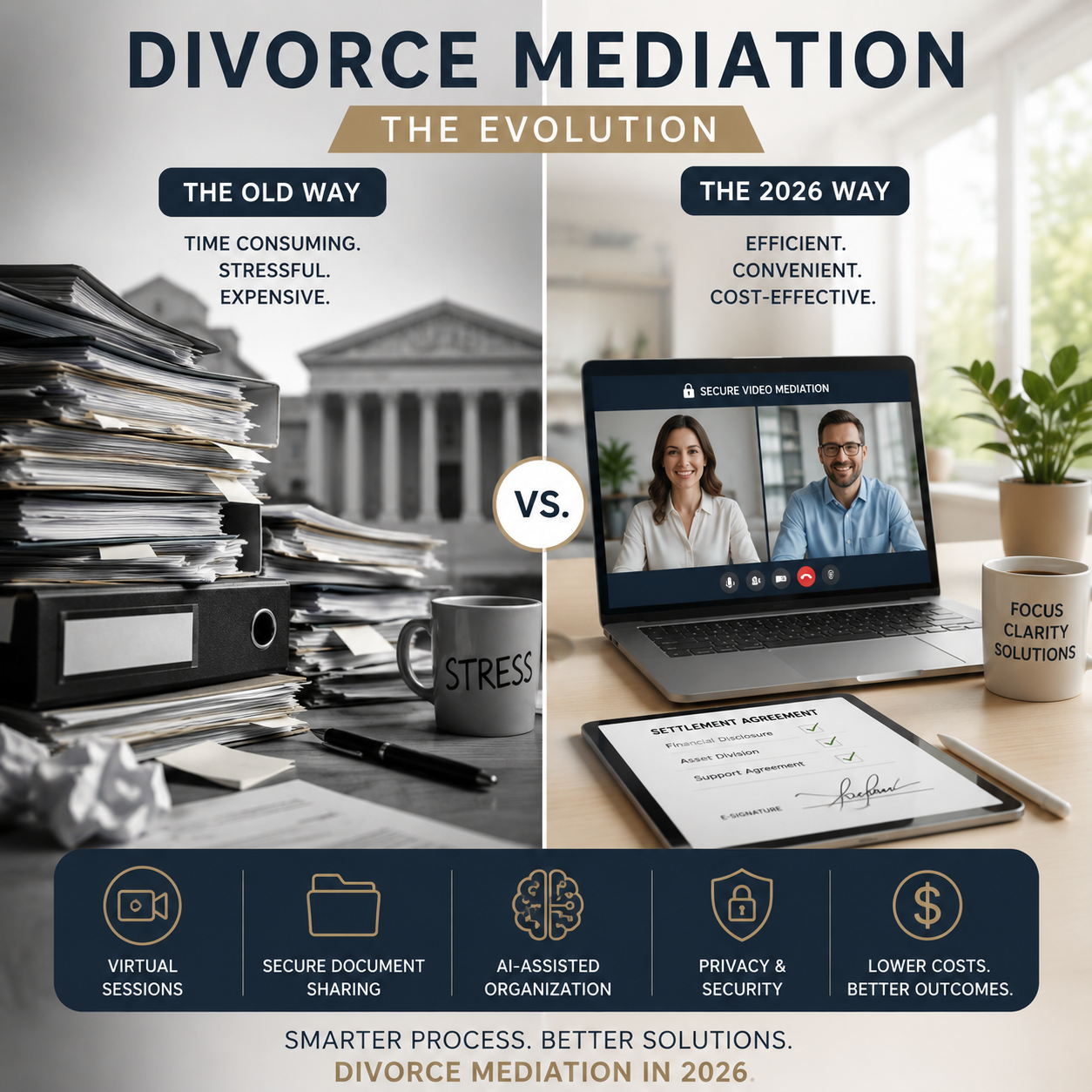
Divorce mediation in Connecticut is shifting toward a virtual-first model. You no longer need to sit in a conference room or take time off work to move your case forward. Most sessions now happen through secure video platforms, with documents shared and reviewed in real time.
This shift solves a practical problem. Traditional divorce timelines often stretch because of scheduling conflicts, travel, and court backlogs. Virtual mediation removes those delays. You can schedule sessions faster, meet from home, and keep momentum.
AI is starting to play a role, but in a narrow, practical way. It helps organize financial disclosures, flag missing information, and assist with drafting agreements. For example, instead of manually sorting bank statements and pay stubs, AI tools can categorize income, expenses, and assets in minutes. That reduces prep time and keeps sessions focused on decisions, not paperwork.
Security is a common concern. Most professional mediation platforms use encrypted video, secure document portals, and controlled access. This is similar to online banking standards. If you are working with a mediator, ask what platform they use and how documents are stored. You want password-protected access and clear data handling policies.
Cost is where you see the biggest impact. A typical litigated divorce in Connecticut can run $15,000 to $30,000 per person. Mediation, even at structured rates like $300 per hour or a $4,200 package, stays significantly lower. Virtual delivery reduces overhead and cuts down on unnecessary sessions.
When choosing a platform or mediator, focus on three things. First, ease of use. If you struggle to log in or share documents, it slows everything down. Second, security. Look for encrypted systems with document controls. Third, integration. Your mediator should be able to draft and revise agreements during or between sessions without delays.
The direction is clear. Mediation is becoming more efficient, more accessible, and more structured. Technology is not replacing the human side of mediation. It is removing friction so you can focus on resolution.